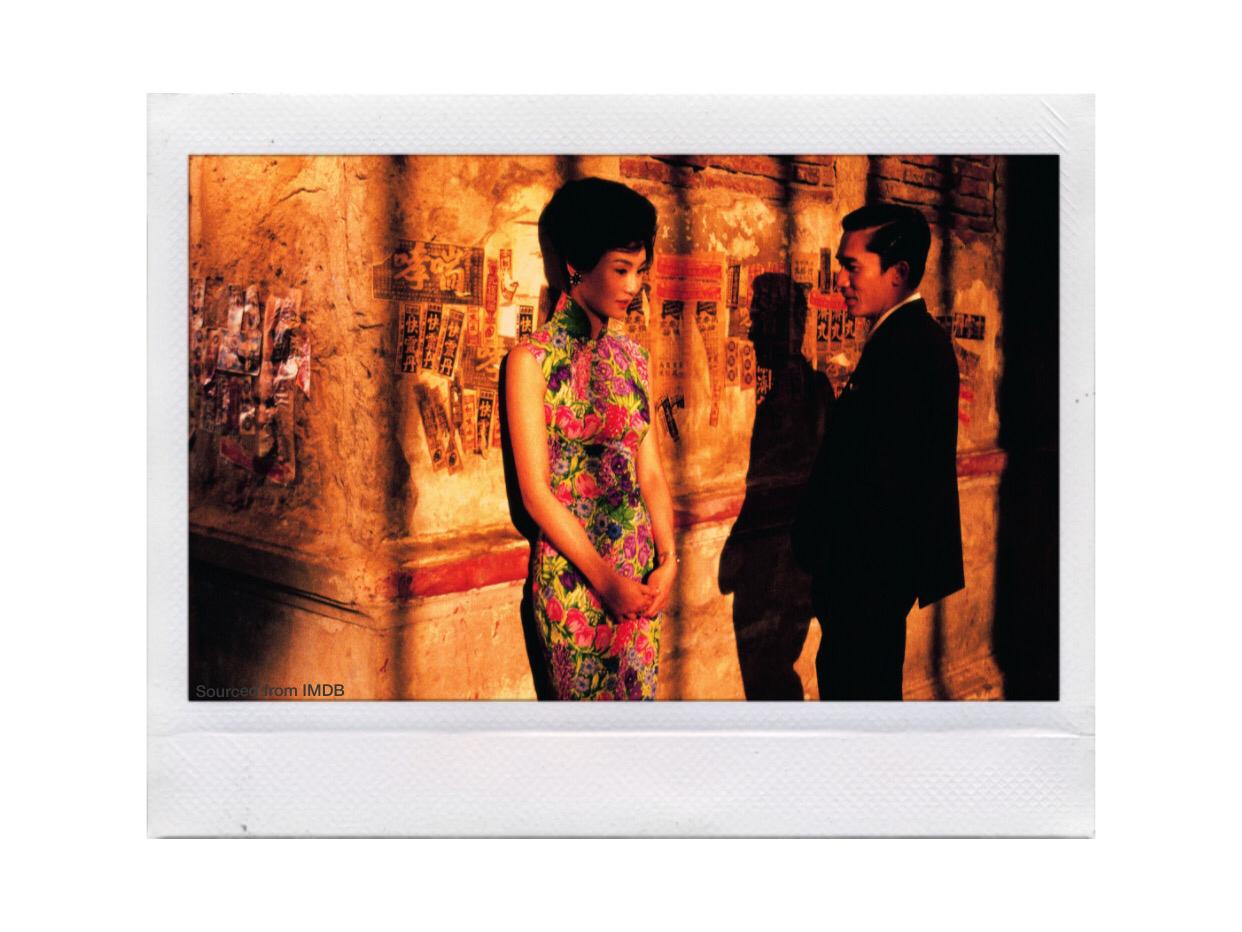
The movie director Wong Kar Wai is known for its interwining of stories and using symbols through the art of cinematography. Also in In The Mood For Love he used forms of symbols which you may have not noticed. That is why this article will explain you the 3 hidden details from the movie.
Frames within frames
In the movie, each shot is captured within a frame, whether the character is standing within the frames of a window, walking through the corridor, or entering a room. The metaphor used within these frames is the prison of thought, that is the frame of being pictured according to a certain label created by society and the feeling of being observed by others, the audience watching the movie included. Due to the circumstances of the two characters, they cannot disclose their feelings to one another, with the constant thought of “What would others think”. As they live in a building with noisy neighbors who are fond of gossiping, each of their moves is observed. Another prison of thought is the constant thought of their spouses. Even if we don’t see the spouses in the picture, they play a big role in the actions of the main characters. When the two recognize their love for each other, it remains trapped in a frame within a frame, where they fight against the urge to look like their infidel spouses.
Repeating soundtrack
Every new day for the two protagonists looks the same as yesterday. The soundtracks used in the movie are “Quizas, Quizas, Quizas” by Nat King Cole and “Yumeji’s Theme” by the Japanese composer Shigeru Umebayasji. Each time when we hear the soundtracks playing in the movie, it is during a slow-motion scene. In most of his movies, Wong Kar Wai uses the same songs playing over and over again. It helps to articulate the emotions and struggles the characters are going through, without using words. In the movie, it shows the forbidden feelings of the two characters, who cannot share their feelings and longing for each other in words. Like the repetitive lives of the characters, the music stays unchanged and repeated. The songs consist mostly of repetition for example “Quizas, Quizas, Quizas” is a repetition of words, and “Yumeji’s Theme” is obsessively repeated throughout the movie. In In the mood for love, Wong uses the music in response to the repeated actions of the characters and tries to show the audience that the slow-motion scenes have a story of its own.
Read this article for streaming platforms to watch In the Mood for Love
In the Mood for Love is one of my favorite movies as it is much more than just a movie, it is a moving art piece where each object, sound, and shot actively tries to tell the audience something. It is like a puzzle where the audience should try to fit the pieces. There is a lot more to find, and with each new watch another message unravels itself. What are your thoughts or ‘finds’ on In the mood for love? Let us know.
….
…
Subscribe to the latest news and stay up-to-date
Get notifications on the latest news and blog posts.
 Cinema Fusion